
The essential oil industry is witnessing a quiet but profound transformation. Walk into any pharmaceutical manufacturing facility, personal care R&D lab, or FMCG formulation center today, and you are likely to find a growing preference for one particular grade of ingredient: pharmaceutical-grade eucalyptus oil. This shift is not a passing trend—it is a structural change in how industries approach quality, safety, and performance.
Eucalyptus Oil has been a staple of traditional medicine and industrial formulations for centuries, prized for its distinctive aroma and powerful bioactive properties. However, not all eucalyptus oil is created equal. The distinction between industrial grades, cosmetic grades, and pharmaceutical grades has become increasingly critical as regulatory standards tighten and consumer expectations rise.
So, what is driving this surge in demand for pharmaceutical-grade eucalyptus oil? Why are formulators, manufacturers, and healthcare product developers moving away from standard grades toward pharmacopeia-compliant options? And how does a supplier like Odowell fit into this evolving landscape?
This article explores the market forces, quality benchmarks, and practical applications behind the rising traction of pharmaceutical-grade eucalyptus oil, offering industry professionals the insights they need to make informed sourcing decisions.
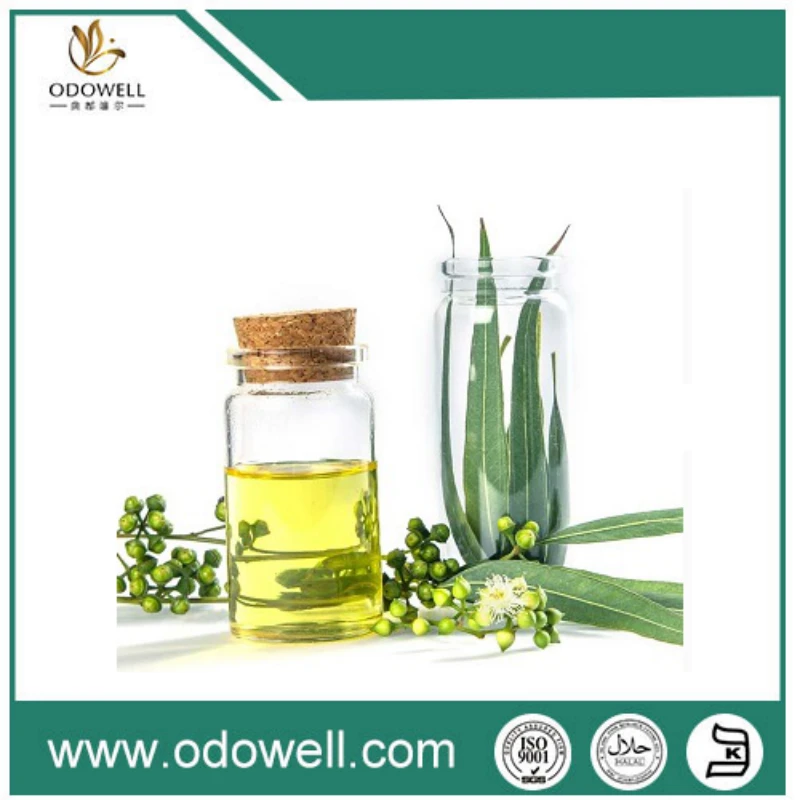
The numbers tell a compelling story. The global pharmaceutical-grade eucalyptus oil market was valued at approximately USD 2.99 billion in 2025, and industry projections indicate steady expansion at a compound annual growth rate (CAGR) of 6.49%, with the market expected to reach USD 4.65 billion by 2032. When examining the broader eucalyptus oil market across all grades, the figures are even more striking. The total eucalyptus oil market was valued at USD 157.39 million in 2025 and is projected to grow to USD 251.85 million by 2032, reflecting a CAGR of 6.94%.
Several macroeconomic and industry-specific factors are driving this growth:
- Regulatory Harmonization: Pharmaceutical standards such as the British Pharmacopoeia (BP), European Pharmacopoeia (Ph. Eur.), and United States Pharmacopoeia (USP) are increasingly being adopted as benchmarks across global supply chains. Buyers and regulators alike are demanding verifiable compliance, making pharmaceutical-grade certification a practical necessity for cross-border trade.
- Consumer Shift Toward Natural Actives: There is a growing consumer preference for plant-derived, naturally sourced ingredients in pharmaceuticals, nutraceuticals, and personal care products. Eucalyptus Oil fits squarely into this narrative, but only when its purity and provenance can be assured.
- Expanding Therapeutic Applications: Clinical research continues to validate the efficacy of eucalyptus oil, particularly its primary bioactive component, 1,8-cineole. This has opened doors in regulated pharmaceutical formulations, including over-the-counter (OTC) cold and cough remedies, topical analgesics, and oral care products.
- Supply Chain Resilience: Post-pandemic disruptions have prompted manufacturers to prioritize supply chain transparency and stability. Suppliers with vertically integrated or tightly managed supply chains—such as Odowell, which maintains strategic partnerships with research institutions like Zhejiang University Laboratory—are increasingly favored for their reliability.
Pharmaceutical-grade eucalyptus oil is not merely a marketing claim. It is a technical specification backed by rigorous pharmacopoeial standards. To meet the requirements of pharmaceutical-grade classification, eucalyptus oil must undergo stringent testing for chemical composition, purity, and contaminants.
According to the British Pharmacopoeia, pharmaceutical-grade eucalyptus oil must contain a minimum of 70% 1,8-cineole, also known as eucalyptol. However, many premium suppliers aim for significantly higher concentrations. ISO 3065:2011, the international standard for Australian-type eucalyptus oil, specifies a 1,8-cineole volume fraction of 80% to 85% for quality assessment.
Beyond cineole content, pharmaceutical-grade eucalyptus oil must also meet strict limits on:
- Heavy metals (lead, arsenic, mercury, cadmium)
- Pesticide residues
- Microbial contamination
- Other volatile impurities
For companies like Odowell, compliance with these standards is not a new challenge but an established practice. Odowell has been serving European and American markets for years, and its QAQC team has extensive experience in impurity analysis and control, fine-tuned to meet the precise requirements of flavor and fragrance mixtures. The company holds multiple certifications including ISO9001, ISO14000, ISO22000, Halal, Kosher, and FCC code, demonstrating its commitment to quality across multiple regulatory frameworks.
The therapeutic and functional properties of eucalyptus oil are overwhelmingly attributed to its 1,8-cineole content. This monoterpene compound is responsible for the oil's characteristic cooling aroma, expectorant effects, antimicrobial activity, and anti-inflammatory properties.
Lower-grade eucalyptus oils, often derived from mixed eucalyptus species or produced via suboptimal extraction methods, may contain cineole levels below 70%. Such oils may still be suitable for industrial applications such as fragrances, solvents, or cleaning products. However, for any application where efficacy, safety, and consistency are paramount—particularly in pharmaceuticals, medical devices, and high-end personal care—pharmaceutical-grade eucalyptus oil with verified high cineole content is non-negotiable.
Consider the following comparison of typical eucalyptus oil grades:
| Property | Pharmaceutical Grade | Food/FCC Grade | Technical/Industrial Grade |
|---|---|---|---|
| 1,8-Cineole Content | ≥70% (typically 80-85%) | ≥70% | Variable, often <70% |
| Pharmacopoeia Compliance | BP/Ph.Eur./USP | FCC | None |
| Pesticide Residue Testing | Required | Required for food use | Not typically required |
| Heavy Metal Limits | Stringent | Moderate | Minimal or none |
| Microbial Limits | Stringent | Moderate | Not required |
The data is clear: pharmaceutical-grade eucalyptus oil represents the gold standard. And as downstream industries increasingly prioritize consumer safety and regulatory compliance, the gap between pharmaceutical grade and lower grades continues to widen.
The versatility of eucalyptus oil is well established, but pharmaceutical-grade material opens doors to applications where standard grades simply cannot compete. Below are the primary sectors driving the current surge in demand.
The most significant driver of pharmaceutical-grade eucalyptus oil demand is its established role in respiratory health. Eucalyptus oil is widely used in cough drops, chest rubs, vapor inhalers, nasal sprays, and expectorant formulations.
A pharmaceutical-grade eucalyptus oil containing over 80% 1,8-cineole is particularly valued for its expectorant, cough-suppressant, antibacterial, and anti-inflammatory properties. Clinical research has demonstrated that eucalyptus oil application via vapor inhalation or oral administration provides benefit for both purulent and non-purulent respiratory conditions, including bronchitis, asthma, and COPD.
The antimicrobial properties of eucalyptus oil make it a natural fit for oral care applications. Pharmaceutical-grade eucalyptus oil is incorporated into mouthwashes, toothpastes, and throat lozenges, where it helps reduce oral bacteria and provides a refreshing sensation.
For manufacturers of oral care products, the use of pharmaceutical-grade material ensures that no harmful impurities or contaminants are introduced into products intended for repeated daily use.
Eucalyptus oil has long been recognized for its ability to alleviate minor muscle and joint pain. In topical analgesic formulations—such as ointments, gels, and patches—pharmaceutical-grade eucalyptus oil serves as an active or supporting ingredient, enhancing the product's therapeutic profile while maintaining safety margins.
Beyond traditional pharmaceuticals, pharmaceutical-grade eucalyptus oil is increasingly used in inhalation devices, humidifiers, and medical aromatherapy products. The purity of pharmaceutical-grade material is essential in these applications, where users may have compromised immune systems or heightened sensitivity to contaminants.
The quality of pharmaceutical-grade eucalyptus oil is determined not only by laboratory testing but also by the integrity of the supply chain that produces it. From the selection of eucalyptus species to the extraction method and post-processing rectification, every step influences the final product's purity and consistency.
Not all eucalyptus species produce oil suitable for pharmaceutical applications. Eucalyptus globulus is the most commonly used species for pharmaceutical-grade production, as it naturally yields high concentrations of 1,8-cineole. Eucalyptus radiata and Eucalyptus polybractea are also cultivated for cineole-rich oil.
Steam distillation is the extraction method of choice for pharmaceutical-grade eucalyptus oil. In this process, steam is passed through fresh or partially dried eucalyptus leaves, vaporizing the volatile oil components. The vapor is then condensed and separated from water, yielding pure essential oil.
Steam distillation offers several advantages for pharmaceutical-grade production:
- It is a solvent-free process, leaving no chemical residues
- It preserves the natural chemical profile of the oil
- It is scalable and reproducible
Advanced steam distillation systems, such as those incorporating food/pharma-grade stainless steel contact parts (SS 304/316), ensure hygiene and durability while preventing metallic contamination.
Oil obtained from initial distillation—often referred to as crude eucalyptus oil—may not immediately meet pharmaceutical-grade specifications. Rectification is a secondary distillation process used to concentrate 1,8-cineole levels and remove unwanted terpenes and impurities. The British Pharmacopoeia specifically notes that rectification is used to bring lower-grade oils up to the high cineole standard required for pharmaceutical use.
Sustainability is an emerging consideration in pharmaceutical-grade eucalyptus oil procurement. Responsible buyers increasingly seek assurance that eucalyptus plantations are managed according to internationally recognized standards such as FSC (Forest Stewardship Council) or PEFC certification.
For supply partners like Odowell, which has established cooperative relationships with Zhejiang University Laboratory and maintains rigorous quality control systems, the integration of sustainability criteria into sourcing protocols represents a natural extension of their quality-first philosophy.
To fully appreciate why pharmaceutical-grade eucalyptus oil is gaining traction, it is helpful to compare it directly against other commercially available grades.
| Attribute | Pharmaceutical Grade | Food/FCC Grade | Cosmetic Grade | Technical Grade |
|---|---|---|---|---|
| 1,8-Cineole Content | ≥70% (80-85% typical) | ≥70% | Variable (typically 60-80%) | <70% |
| Pharmacopoeia Compliance | BP/Ph.Eur./USP | FCC | None | None |
| Heavy Metal Testing | Comprehensive | Basic | Optional | Not required |
| Pesticide Residue Testing | Required | Required for food contact | Not typically | Not required |
| Microbial Limits | Stringent USP/EP limits | Moderate | Basic | None |
| Stability Documentation | Full dossier available | Limited | Varies | Minimal |
| Certificate of Analysis | Lot-specific with full specifications | Lot-specific, limited parameters | Available but variable | Often not provided |
| Traceability | Full supply chain traceability | Moderate | Limited | Minimal |
| Regulatory Acceptance | Worldwide pharmacopoeia recognition | Food regulatory bodies only | Cosmetic regulation only | None |
| Price Point | Premium | Mid-range | Mid-range | Economy |
As the table illustrates, the differences between pharmaceutical grade and other grades are substantial and consequential. For any application involving human exposure—whether ingested, inhaled, or applied topically—pharmaceutical-grade eucalyptus oil offers an unmatched combination of safety, efficacy, and regulatory compliance.
A: According to the British Pharmacopoeia, pharmaceutical-grade eucalyptus oil must contain a minimum of 70% 1,8-cineole (eucalyptol). However, many premium pharmaceutical-grade oils far exceed this minimum threshold. ISO 3065:2011, the international quality standard for Australian-type eucalyptus oil, specifies a 1,8-cineole volume fraction of 80% to 85%. In practical terms, most reputable pharmaceutical-grade suppliers offer eucalyptus oil with cineole content in the 80-85% range, as this higher concentration delivers more consistent therapeutic activity and better batch-to-batch reproducibility. For manufacturers formulating regulated pharmaceutical products or OTC medicines, selecting an oil with verified cineole content at or above 80% is strongly recommended to ensure compliance with both pharmacopoeial standards and finished product performance requirements.
A: Steam distillation is the preferred extraction method for pharmaceutical-grade eucalyptus oil because it is a solvent-free process that uses only steam and water to separate the volatile oil from eucalyptus leaves. Unlike solvent extraction (which leaves chemical residues that must be removed), or CO2 extraction (which produces a different chemical profile), steam distillation preserves the natural terpene composition of the oil while ensuring no external contaminants are introduced. The process involves passing pressurized steam through eucalyptus leaf material, which causes the oil glands to rupture and release their contents. The steam-oil mixture is then condensed, and the oil is separated from the water. For pharmaceutical applications, the absence of solvent residues is critical—any residual chemicals would violate pharmacopoeial purity standards and could pose safety risks to end users. Additionally, steam distillation allows for precise control over temperature and pressure, enabling consistent reproduction of the oil's chemical fingerprint across batches.
A: When sourcing pharmaceutical-grade eucalyptus oil, you should look for several key certifications and quality documents. First, pharmacopoeia compliance is essential—verify that the oil meets British Pharmacopoeia (BP), European Pharmacopoeia (Ph. Eur.), or United States Pharmacopoeia (USP) standards, or preferably all three. Second, a lot-specific Certificate of Analysis (CofA) is non-negotiable; this document should include quantitative analysis of 1,8-cineole content, heavy metal testing results (lead, arsenic, mercury, cadmium), pesticide residue screening, microbial limits, and optical rotation data. Third, ISO 9001 certification indicates that the supplier operates a robust quality management system. Fourth, depending on your application and target market, additional certifications such as Halal, Kosher, ISO 22000 (food safety), or organic certification may be required. Odowell, for example, holds ISO9001, ISO14000, ISO18000, ISO22000, Halal, Kosher, and FCC code certifications, providing comprehensive quality assurance across multiple regulatory frameworks.
The rising traction of pharmaceutical-grade eucalyptus oil across global markets is not an accident. It is the result of converging forces: stricter regulatory standards, expanding clinical evidence for cineole-based therapies, growing consumer demand for natural ingredients, and a maturing understanding of supply chain quality management.
For formulators, procurement professionals, and product developers, the message is clear. When applications demand safety, efficacy, and regulatory confidence, pharmaceutical-grade eucalyptus oil is the only rational choice. The higher cost of pharmaceutical-grade material is offset by reduced liability, improved product performance, and enhanced consumer trust.
Companies like Odowell, with deep roots in the flavors and fragrances industry since 2012, represent the kind of supply partners that the market increasingly requires. Working in cooperation with Zhejiang University Laboratory and serving European and American markets for years, Odowell has demonstrated that consistent quality is not a destination but a continuous process of refinement.


