
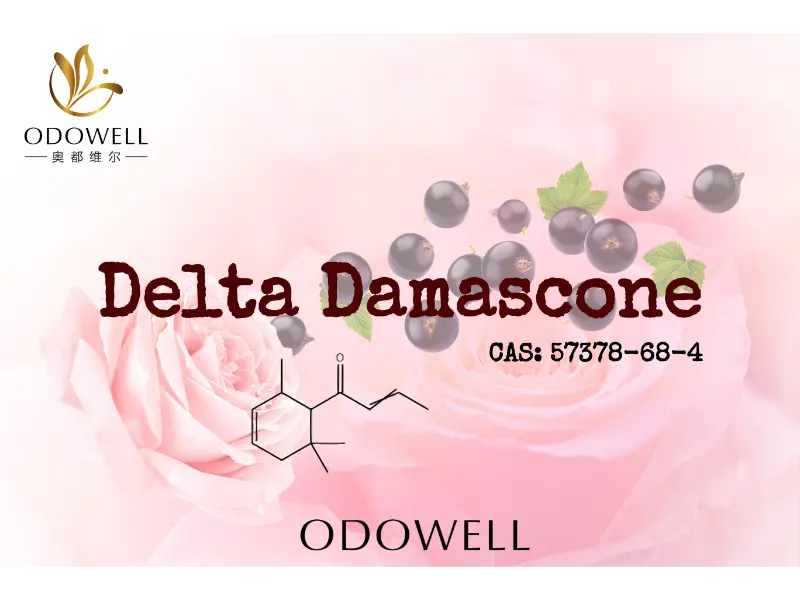
Delta Damascone (CAS 57378-68-4) is a synthetic fragrance ketone celebrated for its powerful blackcurrant (cassis), rich fruity, rosy and subtle tobacco character, offering exceptional diffusion and tenacity even at trace levels.
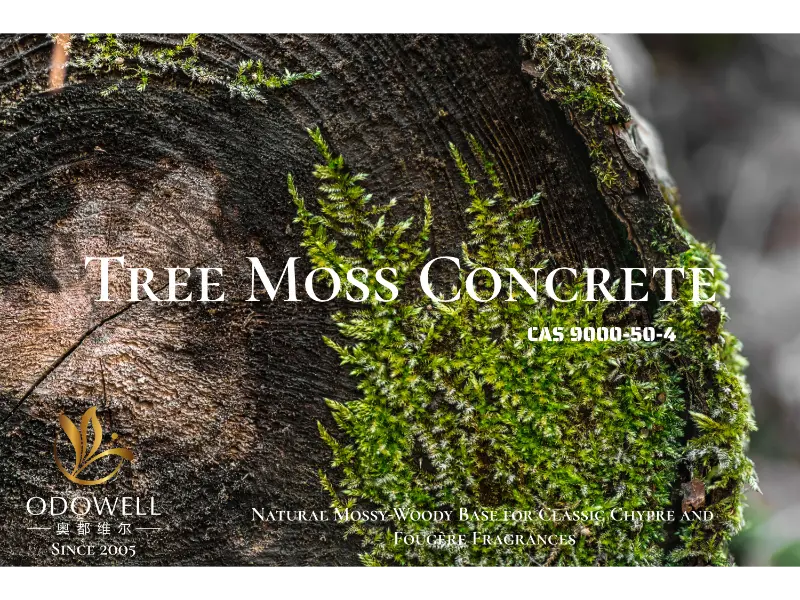
Tree Moss Concrete (CAS 9000-50-4) is a natural waxy extract derived from tree moss (Evernia-type lichens), renowned for its characteristic mossy-green, dry woody odour profile with cool lichen, earthy and subtly saline nuances.
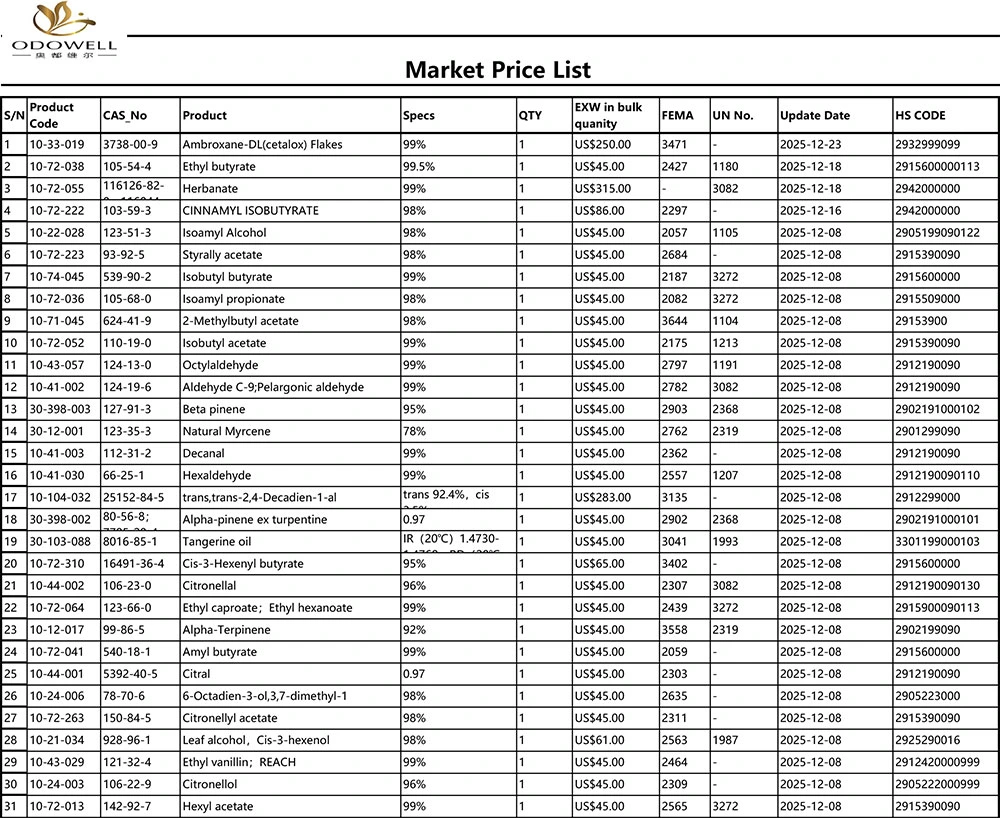
Odowell-Market Price List-2025.11.26-2025.12.26
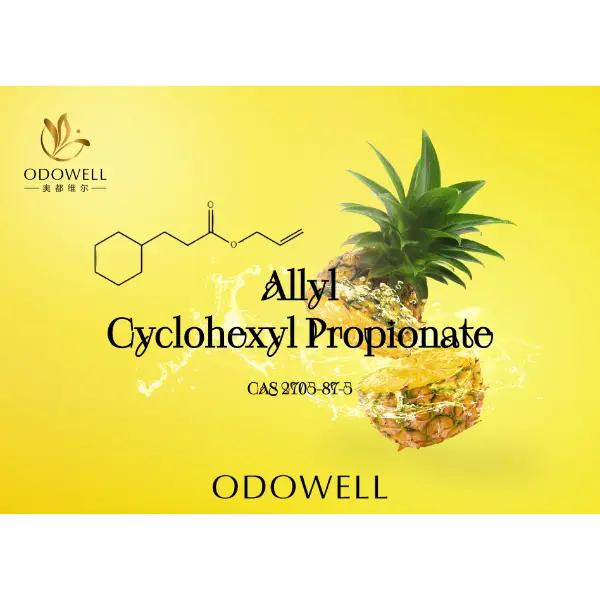
Allyl Cyclohexyl Propionate (CAS 2705‑87‑5), commonly referred to as “pineapple ester”, is a synthetic fragrance ingredient celebrated for its sweet, juicy pineapple character and broader tropical‑fruit nuances.
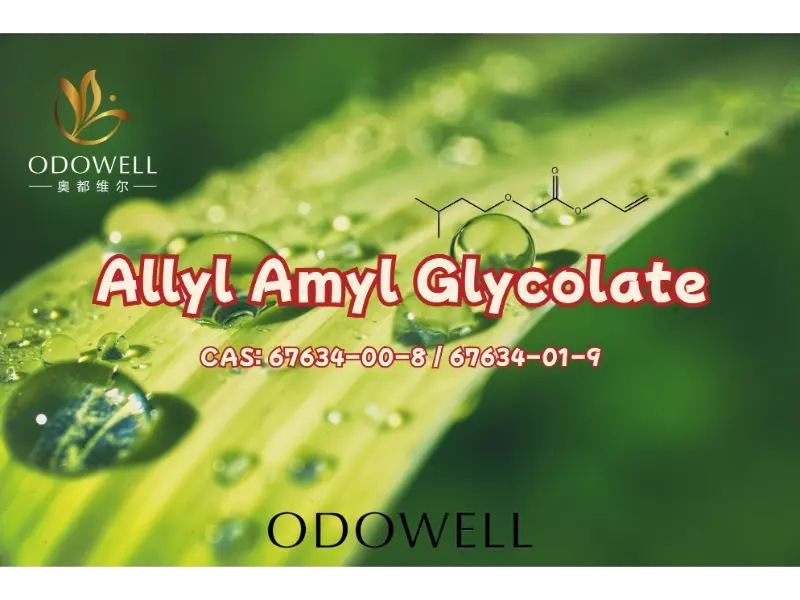
Allyl Amyl Glycolate (CAS 67634‑00‑8 / 67634‑01‑9) is a synthetic ester fragrance ingredient known for its intense, diffusive fruity odour with a distinct pineapple nuance.
The term flavoring agent encompasses a vast array of substances, and their long-term effects remain a hot topic among scientists and nutritionists. Today, I want to dive deep into this subject, address common fears, and share how Odowell approaches this challenge with integrity and science.


